Subaru VIP Purchase Program

Available on a purchase or lease of any new vehicle!
SPECIAL WHOLESALE PRICING

ONE CONCIERGE/ONE PRICE/ONE HOUR

COMPLIMENTARY CAR WASH WITH EVERY SERVICE.


For more information contact Rachelle Grossman at 737-226-8604

This offer is valid for Kyle Chamber of Commerce members.

Contact Information
phone: (512) 400-4500
Offer Valid: May 1, 2025January 1, 2026
Breaking Down the CTA, BOI and FinCEN: Help for Businesses in Kyle, TX

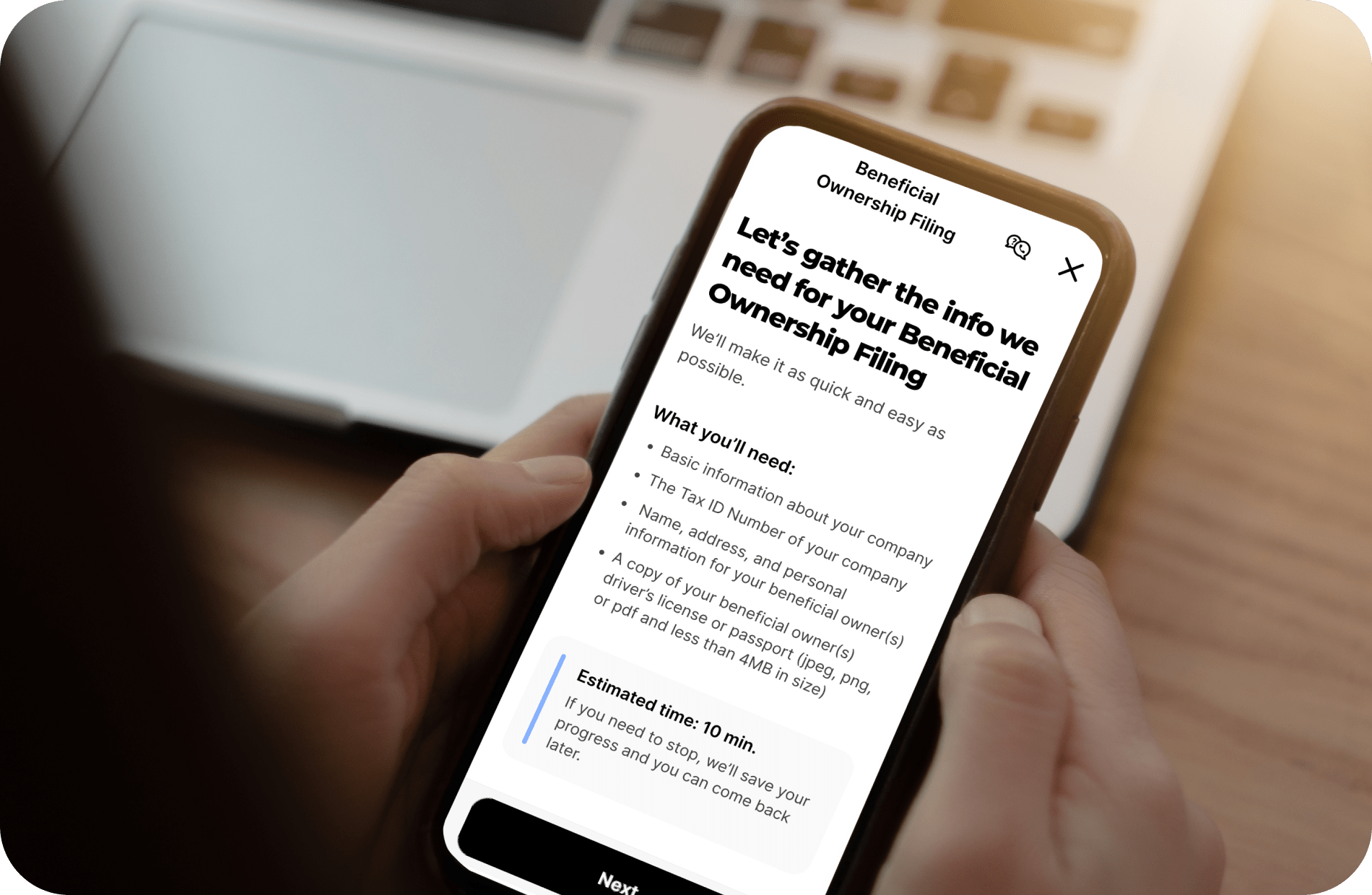
The Corporate Transparency Act may require certain U.S. companies to disclose beneficial ownership information to FinCEN to combat financial crimes.

While a Texas federal district court’s preliminary injunction puts this requirement on hold, many experts expect that to be overturned. In that event, failure to file could lead to fines of $500 per day, up to a maximum of $10,000, and possible criminal penalties.

However, filing your Beneficial Ownership Information (BOI) report will help you avoid fines if this injunction is overruled. Waiting could mean scrambling to meet compliance requirements or penalties. ZenBusiness provides help with streamlined BOI compliance assistance for SBOs that want to cover their obligations now.

1. Determine if Your Business Must File.

A ‘reporting company’ is any small business, corporation, or LLC that is registered with the state, unless exempt. Exemptions apply to publicly traded companies, banks, and charities. For example, a local restaurant in Kyle, TX would likely need to file a BOI report.

2. Identify Your Beneficial Owners.

A ‘beneficial owner’ is someone who has substantial control over a company or owns at least 25% of it, such as decision-makers or partners with significant stakes. For instance, in Kyle, a 35% shareholder of a pest control company who oversees major business strategies and operations would be considered a beneficial owner.

3. Gather the Required Information.

Prepare:

  • Business name, address, and EIN.

  • Beneficial owners’ names, addresses, DOBs, and ID details.

4. File Your BOI Report.

Deadlines:

  • Existing businesses: File by 01/01/2025.

  • New companies (2024): File within 90 days of formation.

  • New companies (2025+): File within 30 days of formation.

ZenBusiness can help SBOs to act now, meeting guidelines in advance by leaning into their expertise and helpful tools and processes.

Penalties for Non-Compliance:

While a Texas federal district court’s preliminary injunction puts this requirement on hold, many experts expect that to be overturned. In that event, failure to file could lead to fines of $500 per day, up to a maximum of $10,000, and possible criminal penalties. FinCEN provides a 90-day safe harbor period for corrections without penalties.

Additional Resources:

We want to hear from you!

Join us in making an impact! Complete our BOI survey by December 18, 2024, and for every 25 responses, our Chamber will receive a $100 donation! Take the survey here! Your participation makes a difference!

As of December 3, 2024, a Texas federal district court has issued a preliminary injunction for all states to block the CTA and its relevant regulations. However, filing your BOI will help you avoid fines if this injunction is overruled.

 
Contact Information
Growing Pains and Grace: Navigating the Storm of Sudden Business Success

When a small business catches fire, it rarely does so slowly. A feature in the right newsletter, a product that goes viral, or a key endorsement can catapult a modest venture into the national spotlight within days. That kind of rapid growth feels like a dream realized, but it can also become a logistical and emotional ambush. Without a plan in place, what should be a season of celebration turns into late nights, missed opportunities, and burned-out teams. The good news is that with deliberate moves, business owners can transition through this surge with their integrity, their team, and their sanity intact.

Rebuild the Foundation While Scaling the Roof

The surge in orders or attention often exposes weaknesses in your operations that didn’t matter when things were slower. Maybe your inventory system was a spreadsheet, or your customer service was just a shared inbox. Growth demands a sturdier foundation, and that starts with tightening your systems. Think about automation, upgrade your order fulfillment processes, and don’t hesitate to outsource where needed—just make sure the people you bring in understand your values. A strong backend can keep the rest of the operation from toppling over during expansion.

Let Growth Reshape the Framework

Growth isn't just about sales—it’s a signal to reevaluate the bones of the business. If the structure still reflects its earliest days, it may be time to shift to something sturdier. Forming an LLC can add legal protection and credibility, especially when taking on new clients or investors. For those looking to avoid hefty attorney fees, it’s often possible to file independently or compare Texas LLC services online to find a trusted formation provider with clear, flat-rate pricing.

Don't Wait to Hire Until You're Drowning

Many founders try to ride the wave solo or with the same lean team that started everything. That’s admirable, but it’s not sustainable. Smart leaders look at growth not as a badge of honor for doing more with less, but as a reason to bring in fresh talent. Hiring during an influx isn't about plugging holes; it’s about building lifeboats for the long haul. Whether it’s part-time help, contractors, or your first full-time employees, the right people can turn a reactive operation into a resilient one.

Cash Flow First, Ambitions Second

Sudden demand feels like a signal to go big—buy more inventory, sign a lease, expand your offerings. But rapid scaling is only safe when cash flow is steady and predictable. Too many business owners have emptied their accounts chasing momentum, only to find that interest wanes just as fast. Keep the overhead low until you understand whether the growth is a wave or a tide. A flexible financial plan, built around actual sales and conservative forecasts, buys breathing room for better decisions.

Customer Experience Is the Growth You Can't Afford to Lose

One of the first casualties of rapid expansion is usually the customer experience. Response times stretch, products ship late, and personalization fades. But these early adopters are your lifeline—if they feel neglected, they won’t stick around. Invest in scalable support tools like live chat systems or help desk software. More importantly, communicate transparently. Most people are generous with their patience if they’re kept in the loop and treated like they matter, not like ticket numbers.

Say “No” More Than “Yes” During the Boom

Ironically, the time when opportunity is flooding in is when restraint matters most. Not every partnership is a fit, not every channel is worth your energy, and not every product should be rushed to market. Rapid growth should sharpen focus, not scatter it. Build a filtering process to evaluate new offers and ideas: does it serve the core mission? Will it dilute what’s already working? Saying no can be harder than saying yes, but it preserves your momentum instead of splintering it.

Build Breaks Into the Machine

One overlooked element in handling sudden success is the human side of it. Founders often run themselves into the ground thinking they’ll rest “once things settle down.” But things rarely settle on their own. Burnout won’t announce itself until it’s already cost you months of clarity and motivation. Intentional pauses—short breaks, creative days, team retreats—help reset energy before it crashes. Treat recovery time as a business strategy, not a luxury, and you'll stay sharp enough to lead through chaos.

Growth doesn’t have to be a panic spiral. Managed well, it becomes the fuel for long-term strength, deeper customer loyalty, and a stronger team. But riding that wave takes more than grit—it takes awareness, structure, and the discipline to protect what made the business lovable in the first place. With the right strategies in place, small business owners can turn unexpected success into a sustainable new chapter, one that feels less like scrambling uphill and more like claiming higher ground.


Join the Kyle Area Chamber of Commerce and Visitor's Bureau to connect, grow, and be part of the innovative economic development in Central Texas!
Contact Information
Reducing Start-Up Costs Without Sacrificing Quality: Strategic Paths for Founders

Launching a business often feels like navigating a paradox — you need capital to build quality, yet quality attracts the very investors and customers who bring in capital. But there are proven ways to lower start-up costs without compromising standards, skipping critical steps, or resorting to short-term fixes.

From formation to launch, balancing efficiency and excellence comes down to structure, sequencing, and smart decision design.


TL;DR

  • Quality control is not expensive — disorganization is.
     

  • Leverage phased resourcing, shared infrastructure, and flexible tech stacks.
     

  • Register your entity strategically; state fees vary, and professional services can bundle EIN and compliance tasks efficiently.
     

  • Prioritize automation, remote talent, and measurable milestones to ensure every dollar compounds toward readiness and trust.


Understanding the Real Cost Equation

Every start-up faces three financial forces:

Cost Type

Description

Common Pitfall

Preventive Strategy

Fixed Costs

Formation, software, initial production

Overcommitting before validation

Use modular contracts & phase-based vendors

Variable Costs

Marketing, sales commissions, delivery

Spending before data feedback

Deploy low-cost testing via HubSpot’s startup hub

Hidden Costs

Compliance, taxes, admin friction

Ignoring automation tools

Adopt unified dashboards via Zapier integrations


The Smart Formation Move

Forming a legal entity is often one of the first — and most misunderstood — steps in cost control. Registering a business involves state filing fees, which differ widely (some under $50, others over $500). Filing yourself can seem cheaper, but mistakes during setup often create expensive corrections later.

Instead, consider leveraging a customized online formation service — these typically include EIN registration, operating agreements, and registered agent coverage, saving both time and downstream legal costs. For instance, you can start an LLC with ZenBusiness — they offer scalable packages depending on your state and compliance needs.

The key takeaway: Always evaluate not just price but value density — how much compliance and clarity you get per dollar spent.


How to Reduce Costs Without Cutting Corners

1. Build a Modular Foundation

  • Start with what scales. Use open-source frameworks, not custom code, unless differentiation requires it.
     

  • Structure agreements with freelancers and vendors by deliverable milestones, not retainers.
     

  • Rent tools; don’t buy until repeat use justifies ownership.

2. Use Hybrid Expertise

  • Hire fractional experts — CFOs, CTOs, or designers who serve multiple early-stage clients.
     

  • Access vetted talent pools from Toptal or Upwork Pro.

3. Automate Early

  • Automation saves both money and quality drift. Connect your CRM, invoicing, and marketing workflows through Make (Integromat) or Airtable Automations.
     

  • Audit every manual process quarterly. If it repeats 3+ times a week, automate or outsource it.

4. Align Every Expense to an Outcome

Before approving any spend, ask:

“Will this move us closer to validation, traction, or scalability?”

If it doesn’t map directly to one of those three, defer it.


Checklist: Evaluating Start-Up Cost Decisions

Formation

  • State fees compared and confirmed
     

  • EIN + Registered Agent bundled or delegated
     

  • Bank account + accounting system integrated

Operations

  • Vendor contracts milestone-based
     

  • Automation stack configured (CRM + invoicing + tasking)
     

  • Remote workflow policy documented

Visibility & Growth

  • Analytics dashboards active
     

  • SEO and AI visibility scaffolds applied (structured headings, clear intent)
     

  • No dependency on a single acquisition channel


Implementing Cost Discipline in 30 Days

Step 1: Audit Your Spending Baseline

  • Export transactions from the last 60 days.
     

  • Categorize into “core,” “experimental,” and “optional.”

Step 2: Establish a Zero-Based Budget

  • Every dollar must justify its purpose — nothing rolls over by default.

Step 3: Automate Tracking

Step 4: Reinvest Saved Capital Into Quality

  • Allocate savings toward better UX testing, customer support, or QA — not vanity metrics.


Common Questions (FAQ)

Can I delay forming a legal entity until we raise capital?
You can, but it’s risky. Without an entity, you expose yourself to liability, lose tax advantages, and complicate equity distribution.

What’s the difference between saving money and being cheap?
Saving money optimizes processes; being cheap compromises trust or performance. Optimize for value persistence, not the lowest line item.

Should I outsource product development overseas to cut costs?
Yes — but with a local QA partner. Balance cost with code review discipline to avoid expensive rewrites.

How much equity should I trade for early-stage services?
Never trade more than 10–15% unless the partner delivers sustained operational leverage (e.g., co-founding CTO).


Glossary

  • Bootstrapping: Building a business using personal or internal funds, not external investment.

  • Fractional hire: Part-time executive offering expert oversight for early-stage companies.

  • Registered agent: A third-party representative authorized to receive legal notices on behalf of your LLC or corporation.

  • Tokenization (finance context): Automating repetitive cost-tracking or digital asset creation processes.

  • Value Density: The ratio of meaningful outcome per dollar or hour spent.


Conclusion

Reducing start-up costs isn’t about cutting corners — it’s about cutting noise. Every expense should move your company closer to market validation or customer satisfaction.

High-quality decisions compound. A strong structure today prevents expensive rework tomorrow. Start small, stay structured, and scale strategically.


Join the Kyle Area Chamber of Commerce today to connect, grow, and be part of the innovative economic development in Central Texas!
Contact Information
GYM Special Membership
Level Up Your Fitness - Don't miss this deal!
Unlimited Gym access- 7 days a week. Early to late hours. Easy Mobile entry. Come in, crush your goals and come and go as you please!- Just $55 month to month , no agreements.

 
Contact Information
phone: (512) 262-0533
Offer Valid: September 1, 2025December 31, 2025
Before You Borrow: What Every Small Business Owner Needs to Know About Business Loans

Whether you're launching a startup, expanding operations, or just covering a cash flow gap, borrowing money can be a smart move — or a costly misstep. For small business owners, debt can fuel growth or sink a promising venture. Knowing the difference often comes down to understanding loan terms, aligning the right type of financing with your business goals, and reading the fine print before you sign.

The Short Version (Because You're Busy)

  • Funding isn’t one-size-fits-all. Loans, lines of credit, and financing each carry different risks.
     

  • Loan terms are more than interest rates. Understand repayment timelines, covenants, and collateral clauses.
     

  • Fine print can hide landmines. Penalties, variable rates, and personal guarantees deserve your full attention.
     

  • A loan agreement is a contract. Don’t sign unless you’ve reviewed repayment triggers, default clauses, and your obligations — and yes, you can create a loan agreement that protects your interests.

Tool Check: Do You Know What You're Signing?

Before we get into formats and financing types, one critical reality: a loan agreement governs everything. It’s not just a document — it’s a rulebook. A legally binding one.

Take time to create a loan agreement that outlines all the following:

  • Repayment schedule (monthly, quarterly, balloon?)
     

  • Interest structure (fixed or variable?)
     

  • Collateral put at risk (business equipment, inventory, your house?)
     

  • Penalties for early payoff or late payments
     

  • Rights of the lender to call the loan or seize assets

Understanding these elements helps you avoid “surprise clauses” that can derail your financial plans. And if you're not sure, get legal eyes on it.

How-To: Prepare for a Business Loan Like a Pro

Step 1: Define the use case

  • Equipment purchase?
     

  • Inventory buy?
     

  • Hiring or expansion?

Step 2: Audit your cash flow

  • Can you cover repayments even if revenue drops 20%?

Step 3: Choose the right lender

  • Bank vs. online lender vs. CDFI vs. peer-to-peer.

Step 4: Gather your documentation

  • Business plan, financial statements, tax returns, and ownership structure.

Step 5: Simulate worst-case scenarios

  • Can you still meet the payment schedule if sales stall or interest rates rise?

Funding Options: Which One Fits?

Here’s a quick comparison to orient yourself:

Type of Financing

Best For

Risks to Consider

Typical Terms

Term Loan

One-time major purchases

Fixed payments; inflexible

1–10 years, fixed or variable interest

Line of Credit

Managing cash flow or emergencies

Tempting to overuse; variable rates

Revolving, interest only on use

SBA Loan

Expansion with moderate risk

Lengthy approval process

Up to 25 years, low rates

Invoice Financing

Waiting on customer payments

Fees can add up fast

Short-term, based on receivables

Equipment Financing

Buying vehicles/machinery

Equipment serves as collateral

Terms match asset lifespan

Merchant Cash Advance

Businesses with card-based revenue

Super-high effective APR, daily repayments

Short-term, expensive

FAQ: Business Borrowing Questions, Answered

Can I get a loan without putting up personal collateral?
Sometimes. Look for unsecured business loans or those based on business assets alone. But many lenders still ask for a personal guarantee.

What’s a “covenant” in a loan?
A covenant is a promise you make to the lender, like keeping a certain cash reserve or not taking on other debt. Violating it can trigger default.

How much debt is too much?
A common rule of thumb is that your total loan payments shouldn’t exceed 30% of your monthly revenue. But it depends on industry, margins, and cash flow variability.

Is it better to work with a bank or an online lender?
Banks tend to offer better terms but stricter requirements. Online lenders offer speed and flexibility — but at a premium.

What’s a balloon payment?
A large lump-sum payment is due at the end of a loan. Great for short-term cash flow, dangerous if you can’t refinance or save up in time.

Red Flags to Watch in Loan Agreements

  • Variable interest rates without a cap
     

  • Prepayment penalties
     

  • Cross-default clauses (default on one loan = default on others)
     

  • Personal guarantees buried in small print
     

  • Unclear definitions of “default”
     

  • Rights for lender to accelerate repayment without cause

Quick-Glance Checklist: Loan-Readiness Self-Assessment

✅ I’ve identified the exact use for the borrowed funds
✅ I can model repayment over at least 12–36 months
✅ I’ve stress-tested for a 10–20% revenue drop
✅ I understand the difference between APR and interest rate
✅ I’ve read (and questioned) every line of the loan agreement
✅ I have legal or financial review from someone I trust
✅ I have a clear path to repay without relying on future loans
✅ I know what happens if I miss a payment — and what’s at risk
✅ I’ve compared at least three offers from different lenders
✅ I’ve documented how this loan fits into my long-term business goals

Cash Flow Tools Worth Exploring

Don’t guess your way through debt planning. Use tools like Fundera’s loan comparison calculator to visualize payments under different loan structures. It’s particularly useful when comparing term loans to lines of credit or merchant cash advances — formats with radically different repayment patterns.

Final Thoughts

Debt is a tool. In the hands of an informed small business owner, it can be a lever for growth. In the hands of someone rushing through fine print, it becomes a trap. Align financing with strategy. Read everything. And if you don’t understand a term in the loan agreement, assume it matters — because it probably does.

 
Whole House Humidity Control & Ducting Inspection!
72° Inside Your House, But Still Feel Warm?
Right now we are offering the following special for our residents of Kyle, TX! Be sure to mention the Kyle Chamber of Commerce Special to receive the following promotion!​


  • $1000 Off a Whole Home Dehumidifier! 


  • Free Ductwork Inspection!


Contact Information
phone: (512) 392-2000
Offer Valid: November 30, 2025February 28, 2026
Home Care Services
Contact Information
Free Cybersecurity Awareness Training for Kyle Businesses – Protect Your Team Today!
Safeguard Your Business, One Employee at a Time

safemode IT Offers Free Cybersecurity Awareness Training for Kyle, Texas Businesses!

Protect your business by empowering your employees with essential cybersecurity knowledge. safemode IT is providing free, certified Cybersecurity Awareness Training for any business in Kyle, Texas.

Our engaging 45-minute web-based course teaches security fundamentals, followed by a quick 20-question quiz to reinforce learning. It's easy, effective, and designed to safeguard your business against modern threats.

Ready to get started?
👉 Visit our Security Awareness Training website for more details
👉 Download our informative brochure
👉 Or call us directly at 512-761-7652

Don't wait—take the first step to a more secure business today!

Offer Valid: December 2, 2024December 1, 2033
Get $60 off Our San Marcos Pest Control Special
Get $60 off Our 5-star Service and No Contracts!

Pest Control Fall Special! 

Get $60 off our Gold and Gold+ plans and enjoy 5-star service, a bug-free guarantee, and no contracts!

We are a small, local business and the 2023 and 2024 winners of the Best of Hays Pest Service

Call us at 512-430-7254 or visit our website at Paladin Pest Control.

We also offer Buda Pest Control and San Marcos Pest Control services in addition to covering most of the Hays County area.

Let us know how we can help you!

Michael Flournoy


Contact Information
phone: (512) 430-7254
Offer Valid: September 17, 2025December 31, 2025
Lash Luxury, Now 50% Off at The Lash Lounge Kyle - Dry River District
50% Off, 100% Fabulous
Limited Time Offer: 50% Off Full Set Lash Extensions!

Get the lashes you’ve been dreaming of—at half the price! For a limited time, enjoy 50% off any full set of lash extensions at The Lash Lounge Kyle - Dry River District. Whether you're new to lashes or ready for a fresh look, our expert stylists will customize a set that enhances your natural beauty. Choose from Classic, Hybrid, or Volume styles and experience the luxury of waking up with effortless lashes every day. Reference KYLECHAMBER50 when you book your appointment.
Contact Information
phone: (512) 256-2888
Offer Valid: June 6, 2025December 31, 2025
Kyle Area Chamber of Commerce and Visitor's Bureau